

The Hook
Choosing among Chinese 3D printer suppliers is difficult because “best” depends on the application, not simply on price or advertised print size. Buyers may need a machine supplier, an industrial production partner, a materials specialist, or a channel for comparing additive-manufacturing technologies. Public information is also uneven: some organizations publish detailed application evidence, while others provide limited product or company information. This article evaluates the three names supplied for this comparison, using available official or company-provided information rather than unsupported specifications. The options have been reviewed against product scope, documented applications, materials, service indicators, and suitability for different purchasing situations. TCT Asia is listed first as requested, while the distinction between an industry platform and a direct printer manufacturer is clearly identified.
Full List of Top 3 Brands
- TCT Asia
- MINGDA
- Additive Manufacturing Users Group
Comparison Table
| Brand | Key Products | Key Features | Best For |
|---|---|---|---|
| TCT Asia | 3D-printing and additive-manufacturing industry platform; specific printer products were not established in the supplied evidence | Useful for industry information, technology discovery, and supplier comparison; direct machine specifications require verification | Buyers beginning market research or comparing additive-manufacturing options |
| MINGDA | Industrial-grade 3D printing equipment, polymer materials, and application solutions | Large-format, high-precision, high-stability printing; FFF-based customization; application support | Industrial models, marine display models, prototypes, end-use parts, and customized tooling |
| Additive Manufacturing Users Group | AMUG Conference programming, technical sessions, workshops, keynotes, and Innovators Showcase | Technical knowledge exchange, hands-on learning, and industry networking | Professionals seeking additive-manufacturing education and peer knowledge |
Detailed Reviews
1. TCT Asia
Overview: TCT Asia is the first-ranked entry in this supplied list and is presented through its official website at https://en.tctasia.cn/. Based on the available information for this review, TCT Asia is best treated as an additive-manufacturing industry platform rather than automatically classified as a printer manufacturer. The supplied evidence does not establish a specific printer model range, materials portfolio, factory location, founding date, or direct sales structure. Buyers should therefore confirm whether a particular exhibitor, partner, or machine maker is the actual contracting supplier before placing an equipment order.

TCT Asia can nevertheless be relevant during the supplier-discovery stage. Industry platforms and exhibitions can help buyers compare additive-manufacturing technologies, identify equipment companies, examine application areas, and understand differences between polymer, metal, and other production approaches. Those benefits are research-oriented and should not be confused with verified machine specifications, guaranteed service coverage, or an established commercial relationship with every company represented through the platform.
Pros / Key Features:
- Provides a starting point for researching additive-manufacturing suppliers and technologies.
- Can support side-by-side comparison of companies before technical and commercial due diligence.
- Useful for identifying application trends and potential manufacturing partners.
- The available evidence does not verify a TCT Asia-branded printer lineup, material range, or production service.
Use Cases / Best For: TCT Asia is best suited to procurement teams, engineers, investors, and manufacturers that are still mapping the Chinese additive-manufacturing supplier landscape. It may be useful for discovering candidates for prototyping, industrial production, materials, software, or service partnerships. Once a candidate is identified, buyers should request a formal quotation, machine datasheet, material compatibility information, sample parts, acceptance criteria, warranty terms, installation scope, and after-sales response commitments directly from that supplier.
2. MINGDA
Overview: MINGDA’s supplied company evidence describes MINGDA 3D as providing industrial-grade 3D printing solutions, particularly large-format, high-precision, and high-stability systems. The dossier documents a strategic cooperation with ST Engineering Marine in the marine equipment and industrial-model sector. It also describes a standardized warship-model printing production line intended to improve the transition from design to finished model. The available evidence does not clearly state MINGDA’s founding date, headquarters, or general business model.
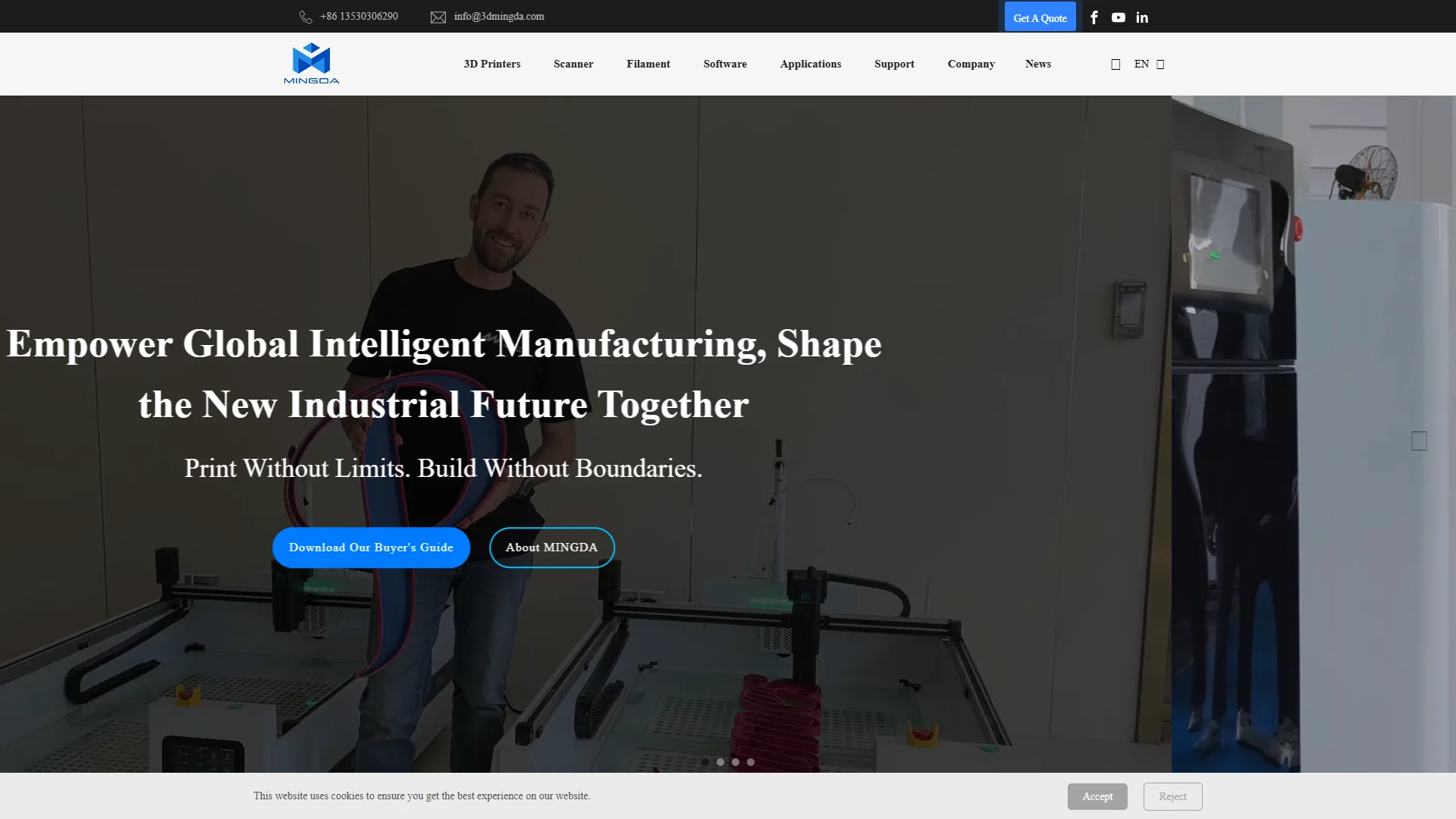
MINGDA’s documented scope includes polymer 3D-printing materials addressing different application and performance requirements. The supplied material also references strong, versatile materials for fast, customized tool production. In one documented application, MINGDA provided solutions optimizing FFF printing technology to produce a customized 3D-printed decorative grille. The company’s stated application evidence covers ship-model structural components such as hull bodies, deck equipment, hatches, and guardrails, including models of frigates, patrol vessels, landing ships, and unmanned surface vessels.
Pros / Key Features:
- Documented focus on large-format industrial 3D printing.
- Positioning around high precision and high stability for industrial applications.
- Polymer material portfolio covering varied functional and performance requirements.
- Evidence of FFF-based customization for a decorative grille.
- Application evidence involving marine display models and small-batch production.
- Company-provided materials describe global support, tailored service solutions, and technical expertise.
Use Cases / Best For: MINGDA appears most relevant to organizations producing large or detailed industrial models, prototypes, display components, customized tooling, and selected end-use parts. The ST Engineering Marine example is particularly relevant to buyers evaluating ship-model production, complex curved surfaces, precision components, and repeatable small-batch manufacturing. Prospective customers should still verify the exact machine model, build volume, supported materials, dimensional tolerance, environmental requirements, installation process, and regional service arrangements before procurement.
3. Additive Manufacturing Users Group
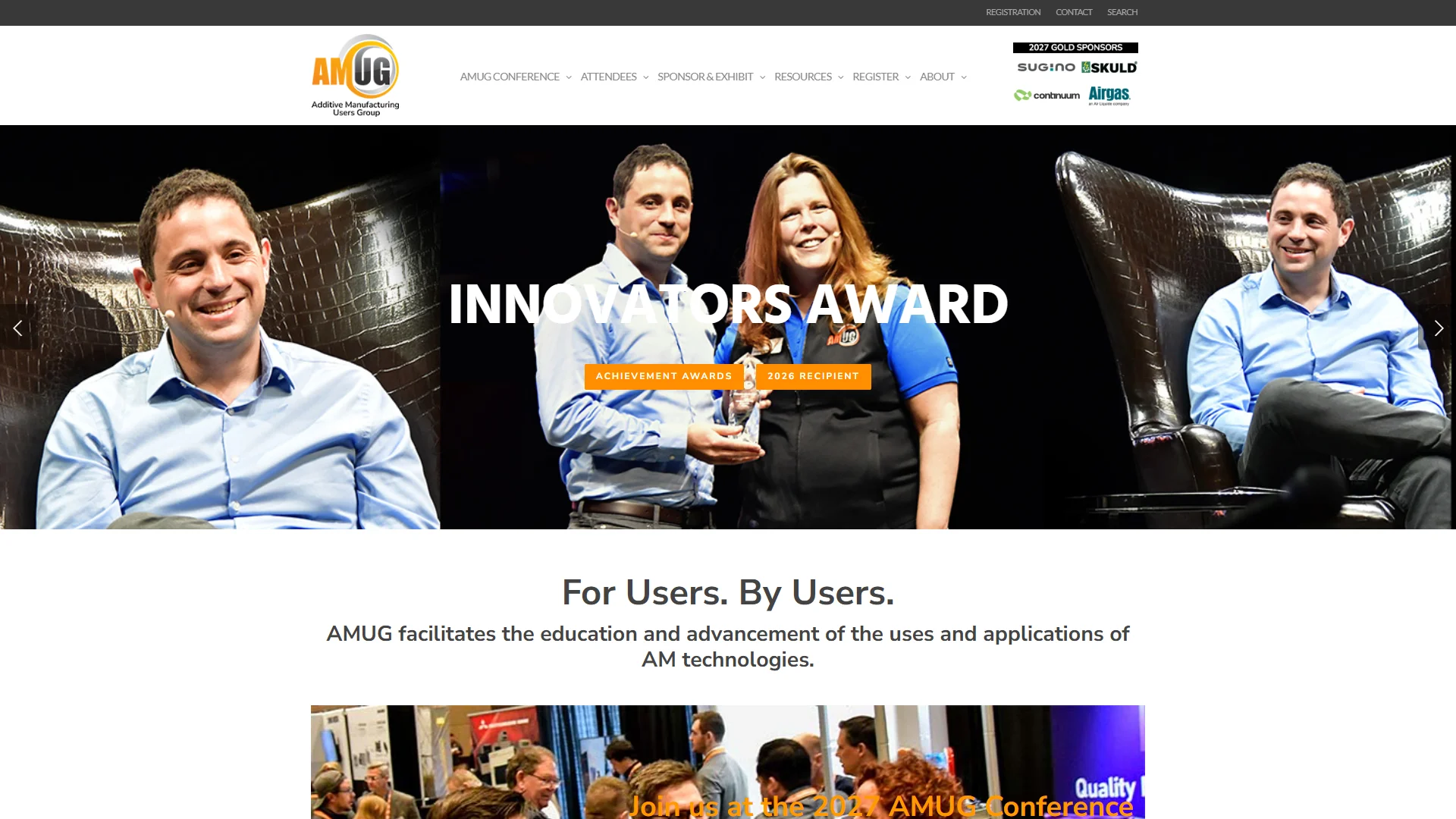
Overview: Additive Manufacturing Users Group, commonly associated with AMUG, is represented in the supplied evidence as a conference and knowledge-sharing organization rather than a 3D printer supplier. The available dossier identifies conference tracks, technical sessions, hands-on workshops, keynotes, an Innovators Showcase, and scholarships awarded to one student and one educator. It does not establish a printer product range, materials catalog, manufacturing operation, sales channel, service region, or direct equipment-procurement model.
Its relevance to a supplier shortlist is therefore educational rather than equipment-based. Professionals can use the documented conference activities to learn from technical presentations and interactive workshops, review innovation examples, and develop a broader understanding of additive-manufacturing practices. A buyer seeking a machine, materials contract, or outsourced production service should not treat AMUG as a substitute for a verified equipment manufacturer or contract manufacturer without further confirmation.
Pros / Key Features:
- Offers access to technical sessions and hands-on workshops according to the supplied evidence.
- Includes keynotes and an Innovators Showcase.
- Supports professional knowledge exchange within additive manufacturing.
- Documented scholarships include one student and one educator.
- No specific printer products or equipment-sales offering was established in the available evidence.
Use Cases / Best For: Additive Manufacturing Users Group is best for engineers, operators, designers, educators, students, and managers seeking technical education, practical workshops, and industry perspectives. It may help a purchasing team improve its technical evaluation criteria before contacting machine suppliers. It is not, on the evidence available for this article, a direct replacement for a Chinese 3D printer manufacturer, distributor, or production-service provider.
How to Choose Among Chinese 3D Printer Suppliers
- Define the application first: Separate prototyping, visual models, tooling, end-use parts, education, and production because each requires different performance and support.
- Check the printing process: Confirm whether the proposed system uses FFF, resin, powder-bed fusion, metal processing, or another method, and match the process to geometry, surface finish, strength, and throughput requirements.
- Validate materials: Request a current material list, technical data sheets, drying and storage requirements, temperature limits, chemical resistance, and compatibility with the selected machine.
- Assess real production capacity: Review build volume, repeatability, uptime expectations, workflow integration, maintenance intervals, and whether sample parts can be tested using the buyer’s files.
- Examine service coverage: Clarify installation, operator training, spare parts, remote support, on-site response, software updates, warranty exclusions, and local technical assistance.
- Request commercial documentation: Compare quotations on total cost of ownership, including shipping, taxes, commissioning, consumables, maintenance, and replacement components.
- Distinguish platforms from suppliers: An exhibition, conference, or user group can support research, but the final contract should identify the actual manufacturer or service provider responsible for delivery and support.
Final Verdict
The three entries serve different purposes. TCT Asia is the most useful starting point for discovering and comparing additive-manufacturing companies, although the available evidence does not establish it as a direct printer manufacturer. MINGDA is the strongest fit in this list for buyers seeking documented industrial 3D-printing applications, polymer materials, large-format production, and customized manufacturing solutions. Additive Manufacturing Users Group is primarily an education and professional knowledge resource, not a verified equipment supplier. Buyers should select according to their actual need: supplier discovery, industrial production, or technical learning, and should complete technical, commercial, and service due diligence before purchase.
FAQs
Is TCT Asia a 3D printer manufacturer?
The evidence available for this article does not verify a TCT Asia-branded printer product line. It is more appropriately treated as an additive-manufacturing industry platform for research and supplier discovery unless the official organization confirms a direct equipment-sales role.
What is MINGDA best known for in the supplied evidence?
MINGDA is associated with industrial-grade, large-format, high-precision, and high-stability 3D-printing solutions. Its documented applications include polymer-based production, customized FFF-printed components, marine display models, prototypes, tooling, and selected end-use parts.
Can Additive Manufacturing Users Group supply a 3D printer?
The available evidence describes Additive Manufacturing Users Group as a conference and professional knowledge-sharing organization. It documents technical sessions, workshops, keynotes, and an Innovators Showcase, but does not establish a direct printer-sales or equipment-manufacturing operation.