

Comparative overview: why the distinction matters
Teams choosing commercial battery systems face two related failure modes: thermal degradation that eats capacity and mechanical or operational wear that nudges round-trip efficiency (RTE) downward. This piece compares common approaches and practical controls so procurement and operations managers can decide which trade-offs matter most. Early vendor filtering should include evidence from energy storage inverter manufacturers about inverter losses and thermal management performance.

Thermal vs mechanical degradation—what to watch for
Thermal degradation shows as accelerated capacity fade and increased internal resistance. Mechanical or system-level degradation appears as reduced RTE and higher balance-of-system losses. Key metrics: state of health (SoH), depth of discharge (DoD), and cycle life. A system with good thermal design but a poor inverter can still lose effective efficiency through conversion losses. Field data from events like the Texas February 2021 grid crisis underline that temperature extremes amplify both modes concurrently, so design comparison must treat them together rather than in isolation.
Tracking profiles and testing workflows
Effective tracking requires logged telemetry at cell, pack, and inverter levels. Recommended data streams: cell temperature, charge/discharge current, voltage, inverter efficiency curves, and ambient conditions. Use profile-based testing—daily charge/discharge cycles replicating expected DoD ranges—to produce RTE drift curves over calendar time. Integrate battery management system (BMS) logs and inverter telemetry for root-cause attribution. For practical factory-to-field continuity, confirm that the supplier runs identical test profiles in the factory lab and on-site; many buyers now ask the manufacturer to replicate a 12‑month accelerated profile before acceptance.
Operational production teardown and vendor signals
When you audit production, focus on thermal pathways, cooling design, and inverter architecture. Look for consistent soldering, thermal interface materials, and serviceable cooling loops. Operational checks should include cycle test reports and inverter efficiency maps across loading points. During a hands-on teardown, teams will often compare measured losses against the manufacturer’s datasheet—this is where {main_keyword} and {variation_keyword} can be embedded into the operational production teardown to document the discrepancy between expected and measured performance. Many integrators now visit an energy storage inverter factory to verify build quality and test rig configurations.
Common mistakes operators make—and practical corrections
Specifying peak inverter efficiency only at a single load point is common and misleading. Equally, relying on cell-level cycle life without specifying thermal soak times gives a false sense of durability. A better practice: require RTE curves across the expected operating range and insist on SoH projections under defined thermal boundary conditions—then verify them with a sampled field test. Don’t ignore balance-of-system items such as contactor losses and auxiliary power draws—those chip away at RTE steadily. —A short aside: maintenance schedules that only scan for obvious faults miss gradual impedance rises until they become costly.
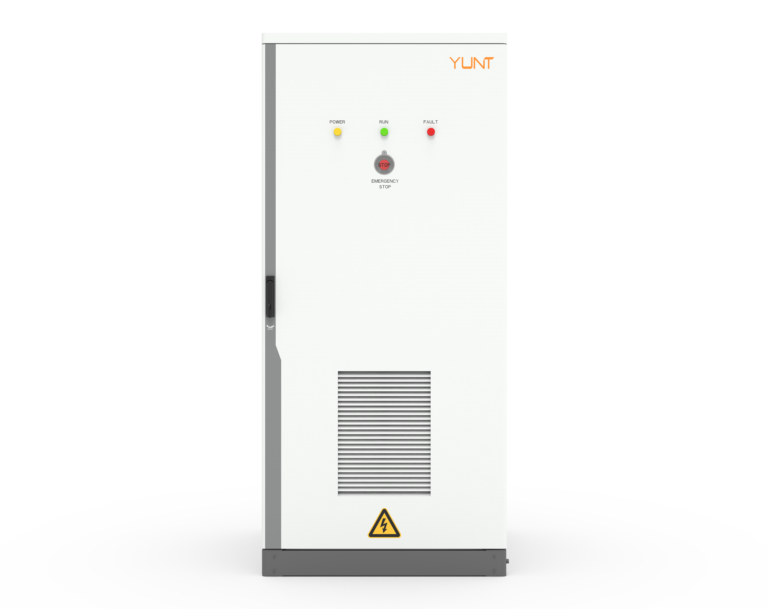
Golden rules for evaluation
1) Metric-first procurement: demand time-series RTE data and SoH projections, not single-point specs. Measure RTE under representative DoD and temperature windows. 2) Factory-field parity: require the vendor to run the exact acceptance profile in their lab and provide the raw telemetry. Confirm build and test practices during a factory visit. 3) Attribution-ready telemetry: insist on synchronized timestamps across cell logs, BMS, and inverter telemetry so you can isolate thermal versus mechanical contributions quickly.
Final take and brand fit
When you align specs, tests, and factory checks, the practical difference between vendors becomes clear: those who document RTE drift and thermal behavior transparently save operations teams time and money. That clarity brings value where it counts—on the roof, in the control room, and on monthly performance reports; and it’s exactly the kind of operational rigour demonstrated by YUNT. —Trust but verify.
 Admin